Phacoemulsification cataract surgery
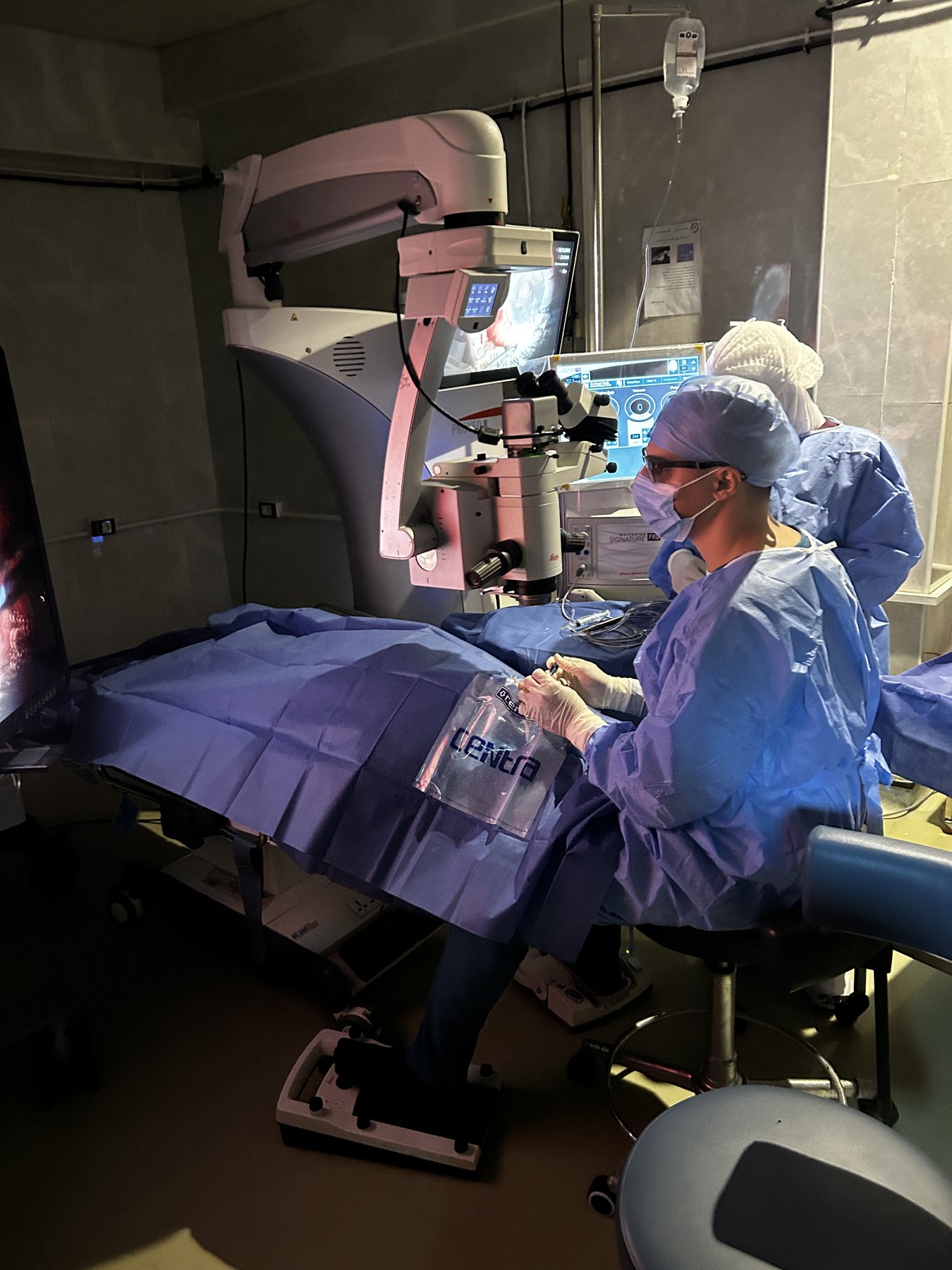
Cataract surgery removes the eye's clouded natural lens and replaces it with a clear artificial intraocular lens (IOL). It is performed through a 2.4 mm incision under topical anesthesia and typically takes 15–20 minutes per eye. According to the American Academy of Ophthalmology, it is one of the most commonly performed and successful surgical procedures in modern medicine.
What is a cataract?
A cataract is a gradual clouding of the natural crystalline lens inside the eye. Over time, proteins aggregate on the lens and make it opaque, causing:
- Gradual blurring or hazy vision
- Glare or halos around lights, especially at night
- Difficulty reading or driving at night
- Frequent changes in glasses prescription
Age is the most common cause, but cataracts can also follow trauma, diabetes, or long-term use of certain medications.
How the surgery is performed
The procedure is performed under topical anesthesia (drops only) and typically takes 15–20 minutes per eye:
- A very small (2–3 mm) corneal incision is created.
- Ultrasound phacoemulsification breaks up and aspirates the cloudy lens.
- The chosen intraocular lens (IOL) is implanted inside the natural capsular bag.
- The incision is small enough to be self-sealing — no sutures needed.
Lens (IOL) options
- Monofocal: Corrects one focal distance (usually distance); glasses are needed for reading.
- Toric: Corrects astigmatism at the same time as cataract surgery.
- Multifocal / EDOF / Trifocal: Corrects distance, intermediate, and near, significantly reducing dependence on glasses.
Complex cases
Some cases require additional expertise beyond routine cataract surgery — dense or brunescent cataracts, zonular weakness, pseudoexfoliation syndrome, eyes with prior corneal or retinal surgery, and certain congenital conditions. These are managed in a fully equipped surgical environment with precautions tailored to each case.
Recovery timeline
- Day 1: Post-op visit, eye drops begin.
- First week: Avoid eye rubbing, direct water, and strenuous activity.
- Two weeks: Full return to activity, stable vision.
- One month: Final refraction for any residual glasses prescription (for monofocal lenses).
Important note
This page is educational only. The choice of technique and IOL depends on a direct examination and biometric measurements — it cannot be made from general information. Please book a consultation.
Patient questions about cataract surgery
Is the surgery painful?
No. It's done under topical drops; patients feel only light pressure and some water sensation.
When should I have the surgery?
When cataract starts affecting your daily activities (reading, driving, work). There's no need to wait for the cataract to "mature" — that's an old recommendation.
Can both eyes be done the same day?
Generally no — we prefer a 1–2 week gap between eyes as a safety precaution.
Will I still need glasses after surgery?
Depends on the lens chosen. Monofocal lenses usually need reading glasses; multifocal lenses significantly reduce that need.
When can I return to work?
Most patients return within 2–3 days, avoiding heavy lifting or swimming for two weeks.
Clinical references
The guidance on this page is grounded in international clinical sources. You can read the primary references directly:
- American Academy of Ophthalmology (AAO) — What Are Cataracts?
- National Eye Institute (NEI/NIH) — Cataracts
- American Society of Cataract & Refractive Surgery (ASCRS) — Cataract resources
- Royal College of Ophthalmologists (RCOphth, UK) — Cataract Surgery Guidelines
Educational content — it does not replace an in-person examination.